Two Mates, One Deal: Inside the Check-In Pact That Changed How We Play
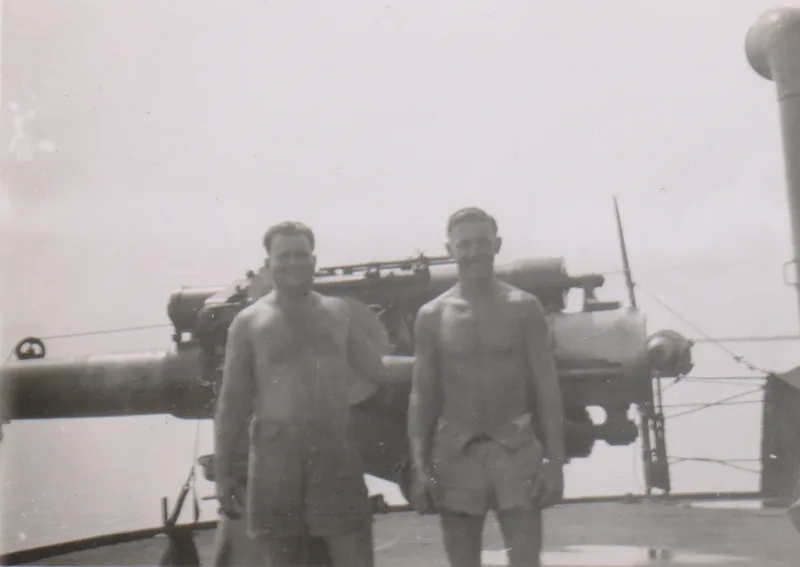
Photo: The photo was taken by my late grandfather, Eric Moulang, during his service in the Australian Merchant Navy during World War II. The original photo is in my possession., CC BY-SA 3.0, via Wikimedia Commons
The pact was Nathan's idea, and he'll tell you that himself within about four seconds of meeting him.
It was simple to the point of being almost embarrassing. Two blokes, both in their thirties, both with a few years of casual online gaming behind them, agreed to a small set of house rules: before any session bigger than their normal weekend go, they'd send a message. After it, another message. No judgement, no lecture, no asking permission. Just a check.
That's it. That was the whole thing.
Where it came from
The idea landed after a Friday night in October that neither of them is especially proud of and neither of them considers a horror story either — which is precisely why it stuck.
“I'd had a decent week,” Nathan says. “So I went bigger than I normally would. Then I went bigger again because I was having a good time. Nothing bad happened. I just woke up Saturday and couldn't remember actually deciding to do any of it.”
Dave got a text the next afternoon. Nathan's version: he wanted a second opinion on whether he was being a tool. Dave's version: he'd done the exact same thing the week before and hadn't told anyone.
“So we made up a rule,” Dave says. “Mostly so we'd stop pretending we were above needing one.”
The first week was genuinely awkward
Both of them describe the same thing: sending the first message felt ridiculous.
“You type 'hey mate, about to have a session, bit of a bigger one' and you feel like a twelve-year-old asking permission to go to the shops,” Dave laughs. “I nearly deleted it four times.”
Nathan reckons that awkwardness was the most useful part. “If it had been easy it would have been nothing. The fact that I noticed myself not wanting to send it — that told me something.”
They kept the language deliberately light. No numbers were swapped. Neither of them was reporting a balance to the other. The message was never about how much, it was about the fact that a decision had been made at all.
What the before-message actually did
Ask them what changed and they give you completely different answers, which is why the story's worth telling.
Dave says the effect was mostly in the pause. “There's a two-minute gap between thinking 'yeah, I might go big tonight' and pressing send. In that gap I cooled off maybe half the time. Not because Nathan said no — he never says no. Just because I had to say the sentence out loud to a person.”
Nathan reckons the before-message did almost nothing for him. For him it was the after-message that mattered.
“The debrief is where it got interesting. You tell a mate how a session went and you can hear yourself. If it was a good time, you sound like it was a good time. If it wasn't, you can't really dress it up — not to Dave, anyway, he'll just give you that look.”
The bit that didn't work
Both agree the pact had a failure mode: it quietly became a permission slip.
“Couple of times I messaged and got 'sounds good mate' and treated that as a green light,” Dave admits. “Which is not what it is. Nathan's not my conscience. He's just a bloke who's got his own stuff going on.”
So they changed the wording. The rule became that the check-in didn't come with an answer. You send it. You don't wait for approval. The point was the saying, not the reply.
They also dropped the pact entirely for a fortnight in the middle, because one of them had a rough patch at work and neither wanted a check-in to feel like surveillance. It resumed when it felt useful again, not before.
What they'd tell someone thinking about trying it
Nathan's advice is blunt: keep it boring. “Don't turn it into a program. There's no tracker, there's no spreadsheet, there's no weekly review. If it starts feeling like admin we'll stop doing it within a month.”
Dave's is more practical. “Pick someone who's not going to be weird about it. And be honest that you might ignore them. The whole thing falls apart if you start treating it like a rule someone's enforcing.”
Six weeks on, the pact is still going. Neither of them claims it's changed their life. What it has done is put a small, human pause in the spot where a decision used to happen automatically — and in a year when so much of our gaming happens alone, on a phone, at eleven at night, that pause turns out to be worth something.
“It's not about being careful every single time,” Nathan says. “It's about not being the only person in the room.”